


BandG Zeus S 9'' MFD, No Transducer
Product Code: AF000-15221-001
B&G Zeus S is the most intuitive and easy-to-use chartplotter for sailing. With unique Sailing Modes providing all the data you need for your situation, detailed charting, and B&G’s new and improved, award-winning sailing features.
Sailing Modes - Improve your sailing with easy-to-interpret pointers from B&G's award-winning sailing features for cruising and racing, with updates to SailSteer, Laylines, StartLine, Routes, Racing and many more. C-MAP powered Safety Alerts guard against grounding and dangerous objects.
Mapping - C-MAP DISCOVER X and REVEAL X charts feature highly accurate data with simple viewing options for clear and easy navigation. Tides and currents projections improve trip planning and route plotting, further supported by our fastest-ever auto routing. Plus, get quick, one-touch access to POIs, tides, channels, and more.
Integration - Zeus S is designed to be the heart of your sailing system. With built-in Wi-Fi, Ethernet, and NMEA 2000, it’s easy to connect to Autopilots, Radar, Instruments and Sensors including wind, depth, speed, GPS and compass. Connecting with the B&G App offers further control and navigation options, both on and off the boat.
Intuitive - Zeus S makes data easy to read, and even easier to digest. The interface is designed to feel familiar – with a new Set-up Wizard to get you started, and helpful feature tips to guide you along the way. Get hassle-free software updates, on- and off-the-water trip planning, and the same clear, accurate chart displays across your Zeus S, App and Web.
Product Contents:
• Zeus S 9" MFD Chartplotter
• Simrad 4-Pin Power Cable 000-00128-001
• Dashboard Mounting Kit for NSX 3009 000-15824-001
• B&G Zeus CR 9 Sun Cover 000-15820-001
• Corner Clips for Zeus S Displays 000-15822-001
What this model does - and what it does not
Everything below is from B&G's own published specification. The right-hand column is the part most listings leave out, and it is the part that causes returns.
Included
- ✓Sounder built into the displayOne 9-pin Xsonic port carrying single-channel CHIRP at 50 and 200 kHz, with DownScan, SideScan and Active Imaging supported. Add a transducer and you have depth - no separate black box needed.
- ✓SolarMAX IPS HD screen9 inch, 1280 x 720, with 85 degree viewing angles top, bottom, left and right. B&G's own panel technology rather than a generic TN screen.
- ✓The B&G sailing featuresSailSteer puts the instrument data on one screen. LayLines calculate navigation on the tacks you will actually sail. StartLine and RaceTimer handle the start. Sailing Modes switch the display between cruising and racing.
- ✓Autopilot controlB&G lists NAC-1, NAC-2, NAC-3, NAC-D and H5000 compatibility. Control runs over NMEA 2000.
- ✓HALO radarB&G states full integration with their HALO radar range, connected over the Ethernet port.
- ✓NMEA 2000 and EthernetOne Micro-C port drawing a single LEN for instruments, AIS, engine and tank data, plus a 5-pin Ethernet port for radar, sonar and chart sharing between displays.
- ✓Wi-Fi and Bluetooth802.11 b/g/n and Bluetooth 4.0 with Bluetooth Classic support, for the B&G app and chart handling.
- ✓microSD up to 256 GBOne slot, taking FAT32, ExFAT or NTFS cards, plus a USB-A port on the back rated 5 V and 1.5 A.
Not supported
- ✗The chart it ships with is not a navigational chartB&G's own cartography line for this part number reads: World wide basemap (not for navigation). Detailed chart card required. You need a C-MAP DISCOVER X or REVEAL X card before the first trip.
- ✗No transducer suppliedThe sounder is in the display, but nothing is in the box to connect to it. Budget for a transducer for the 9-pin Xsonic port - or, if depth already reaches the NMEA 2000 bus from your instruments, the display will simply read that instead.
- ✗No NMEA 0183B&G's connector list has no serial port. An older DSC VHF, AIS unit or instrument head that only speaks NMEA 0183 needs a converter onto the NMEA 2000 bus first.
- ✗No analogue video inputB&G lists IP camera support only. An existing analogue camera will not connect.
- ✗12 V onlyB&G specifies 10 to 17 V dc. A 24 V boat needs a converter - the Zeus SR runs 10 to 31.2 V if that matters to you.
- ✗B&G publishes no maximum sonar depthThere is no depth figure in B&G's specification for the Zeus S sounder, so we do not quote one. The 1 kW in their port description refers to the port type, not a stated output.
- ✗No published cut-out dimensionsB&G's installation manual defers to a printed mounting template supplied with the unit. Do not cut a panel from a scaled drawing.
What you get
The sounder is in the display
A 9-pin Xsonic port with single-channel CHIRP at 50 and 200 kHz, and support for DownScan, SideScan and Active Imaging. Add a transducer, not a black box.
SailSteer and LayLines
Navigation calculated on the tacks you will actually sail, and every instrument reading gathered onto one screen. This is what B&G is for.
SolarMAX IPS HD
85 degree viewing angles in every direction on a 1280 x 720 panel. Readable from the leeward side of the cockpit and through polarised sunglasses.
Ethernet and NMEA 2000
HALO radar, a network sonar module, a second display and the whole instrument system, all on the two networks the unit already has.
Which of these sonars will you actually use?
This section applies to the Zeus S, which has a sounder built in. We sell to more cruising sailors than anglers, so here is the honest version. None of the scanning modes looks forward: DownScan, SideScan and Active Imaging all image water the boat has already passed through, and none of them will warn you about a rock ahead. B&G does not publish a maximum depth for the Zeus S sounder, so we do not quote one.
CHIRP sonar
The channel that tells you how much water is under the keel and what the bottom is made of. It is the one a cruising boat uses, and on the Zeus S it is the channel that is always there.
DownScan
A photograph-like slice of what is directly beneath the boat. Good for reading structure and wreckage, of limited use for pilotage. B&G's HDI transducers give you this alongside CHIRP on the same connector.
SideScan
A swath either side of the boat. It shows what you have already gone past - it does not look ahead, and it is not a shallow-water warning.
Active Imaging
B&G's higher-definition scanning package, combining DownScan and SideScan detail with CHIRP. Needs an Active Imaging, TotalScan or StructureScan transducer on the 9-pin port.
Zeus S 9
| Display | 9 in SolarMAX IPS HD, white backlight |
|---|---|
| Resolution | 1280 x 720 |
| Viewing angle | 85 degrees top, bottom, left and right |
| Touch | Multi-touch |
| Dimensions, display only | 239.0 x 148.5 x 80.6 mm, no bracket and no suncover |
| Dimensions, with suncover | 243.7 x 153.4 x 85.6 mm |
| Dimensions, with bracket | 263.0 x 172.6 x 80.6 mm |
| Weight | 1.2 kg |
| Mounting | Bracket supplied, panel mount or flush mount |
| Compass safe distance | 50 cm |
| Waterproofing | IPx6 and IPx7 |
| Operating temperature | -15 to +55 C |
| Storage temperature | -20 to +60 C |
| Shock and vibration | 100,000 cycles at 20 G |
| Supply voltage | 12 V dc nominal, 10 to 17 V dc |
| Power consumption | 18.8 W maximum, 1360 mA at 13.8 V |
| Recommended fuse | 3 A |
| NMEA 2000 LEN | 1 |
| GNSS | Internal, 32 channels, 10 Hz update |
| GNSS augmentation | WAAS, MSAS, EGNOS and GLONASS |
| Position accuracy | 3 m horizontal |
| Sonar port | One 9-pin Xsonic, single-channel CHIRP at 50 and 200 kHz, HDI and Active Imaging |
| Sonar modes supported | CHIRP, DownScan, SideScan, Active Imaging, TotalScan and StructureScan |
| Ethernet | 1 port, 5-pin |
| NMEA 2000 | 1 x Micro-C |
| USB | 1 x USB-A, 5 V dc at 1.5 A |
| Card slot | 1 x microSD, up to 256 GB, FAT32 ExFAT or NTFS |
| Wi-Fi | 802.11 b/g/n |
| Bluetooth | 4.0 with Bluetooth Classic support |
| Autopilot compatibility | NAC-1, NAC-2, NAC-3, NAC-D and H5000 |
| Video | IP camera support |
| AIS | Received over NMEA 2000 |
| Waypoints, routes and tracks | 6,000 waypoints, 500 routes at 100 points each, 50 tracks up to 12,000 points |
| Cartography supported | C-MAP X-Generation, DISCOVER X and REVEAL X |
| Cartography included | Worldwide basemap, not for navigation |
| Warranty | 2 years |
Fitting it
- Both displays take a bracket or a panel cut-out. The Zeus S ships with a gimbal bracket, a dash mounting kit, corner clips and a suncover; the Zeus SR ships with a gimbal mount kit, a rear mount kit, a dash gasket and a suncover.
- B&G does not publish panel cut-out dimensions in either manual - both defer to a separate printed mounting template supplied with the unit. Do not cut from a scaled drawing.
- Compass safe distance is 50 cm for the Zeus S 9 and 35 cm for the Zeus SR 10. Worth checking against a bulkhead compass before you choose the position.
- Waterproof to IPx6 and IPx7 on both, rated -15 to +55 C in use and tested to 100,000 cycles at 20 G.
- Both have an earth-ground connection point on the back and B&G expects it to be used.
- Fuse the supply: B&G specifies 3 A for the Zeus S and 5 A for the Zeus SR.
NMEA 2000 basics
- Both displays carry one NMEA 2000 Micro-C port and draw a single LEN from the backbone.
- Neither has an NMEA 0183 port. B&G's connector list has no serial port on either model, so an older DSC VHF, AIS unit or instrument head that only speaks NMEA 0183 needs a converter onto the NMEA 2000 bus first.
- AIS targets arrive over NMEA 2000 rather than a dedicated input.
- B&G's published network limits: 100 m maximum backbone, 6 m maximum drop cable, and the network supply must not exceed 3 A.
- Ethernet is separate from NMEA 2000 and carries the heavy traffic - radar, sonar and chart data between displays. Zeus S has one port; Zeus SR has two, one of them gigabit.
Every B&G chartplotter we stock
Live prices and the figures each model actually publishes. B&G states all thirteen of these for both displays, which is more than either Garmin or Raymarine manage - so nothing has been dropped from this table.
| Model | Zeus S 9 9 inch touch, sounder | Zeus SR 10 10 inch, no sounder |
|---|---|---|
| You are viewing | ||
| Screen | 9 in | 10 in |
| Resolution | 1280x720 | 1280x800 |
| Touchscreen | Yes | Touch + knob |
| Built-in sonar | CHIRP + DownScan | None |
| Charts included | Basemap only | Basemap only |
| Radar capable | Yes | Yes |
| NMEA 2000 | Yes | Yes |
| NMEA 0183 | No | No |
| Autopilot control | Yes | Yes |
| Marine Network | Ethernet x1 | Ethernet x2 |
| Video input | IP camera only | Yes |
| Input voltage | 10-17 V | 10-31.2 V |
| Weight | 1.2 kg | 1.8 kg |
| Price | £1,253.99 £1,485 | £2,328.99 |
| View product | You are here | Zeus SR 10 |
Choosing a B&G chartplotter
Three things to settle before you order. Every figure below is B&G's own published data - where they do not publish something, we have left it out rather than guess.
Neither one arrives with a usable chart
B&G is unusually straight about this, and we would rather repeat their words than soften them.
- B&G's own cartography line for the units we stock reads: World wide basemap (not for navigation). Detailed chart card required.
- A basemap is a coarse global outline. It shows you roughly where the land is. It is not a navigational chart and B&G does not claim it is.
- You will need a C-MAP card before the first trip. B&G lists DISCOVER X and REVEAL X as supported, supplied on microSD.
- REVEAL X adds satellite overlay, shaded relief, a vegetation layer and bottom hardness over DISCOVER X - B&G notes the last two are not available everywhere.
- A C-MAP chart purchase includes twelve months of updates.
The larger model is the one without a sounder
This runs the opposite way to what almost everyone assumes, and it cannot be fixed after the fact.
- Zeus S has a sonar port built in: one 9-pin Xsonic connector, single-channel CHIRP at 50 and 200 kHz, with DownScan, SideScan and Active Imaging supported. It ships without a transducer, but the sounder is in the display.
- Zeus SR has, in B&G's own words, No built-in Echosounder ports. Not a sounder without a transducer - no connector at all.
- To get depth on a Zeus SR you need an S3100 or S5100 network sonar module, or another MFD on the Ethernet network that has echosounder ports.
- If your boat already puts depth on the NMEA 2000 bus from its instruments, either display will read it and neither needs a transducer.
The sailing features are the reason to buy B&G
This is what separates B&G from a general-purpose plotter, and it is all built in rather than bought as an add-on.
- SailSteer takes the instrument data and puts it on one screen - B&G's own description is a screen that is easy to interpret and understand.
- LayLines calculate navigation on the tacks you will actually sail, rather than a straight line from waypoint to waypoint that no sailing boat follows.
- StartLine lets you ping both ends of the line and works out where you are relative to it; RaceTimer counts down and can be synchronised at the gun.
- Both displays drive a B&G autopilot over NMEA 2000, and both connect to Triton 2 and Nemesis instruments and to HALO radar.
What arrives, and what you will still need
Supplied
- Zeus S 9 display
- Power cable, 4-pin
- Gimbal bracket
- Dash mounting kit
- Zeus S corner clip accessory
- Suncover for Zeus S 9
No transducer and no chart card are included. B&G lists the bracket under a shared part description covering several of their displays, so the wording on their site names other models alongside this one.
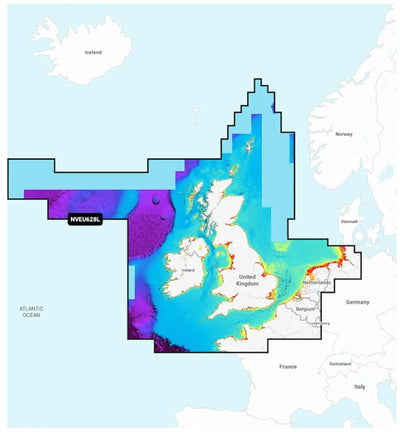
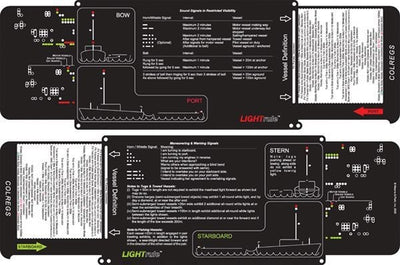
You may also need
B&G Zeus S FAQs
Does it come with charts?
Is there a sounder in it, or do I need a black box?
Can I use my existing depth transducer?
Will my Navionics card work?
Will it talk to my existing instruments?
Will it run on a 24 volt boat?
What do I actually get that a general-purpose plotter does not?
How deep will the sonar read?
Not sure which one fits your boat?
We rig B&G systems every season at Fox's Marina. Talk to us about which C-MAP region you need, whether you want a sounder in the display or on the network, and how it will talk to the instruments you already have.
 Only 1 left
 Only 2 left
 Only 1 left
 Only 1 left
 Only 1 left
 Only 2 left
 Only 1 left
 Only 1 left
 Only 2 left
Delivery & Returns
We ship chandlery, clothing and marine equipment around the world and always endeavour to get your products to you as quickly and as cost-effectively as possible. We will dispatch your order as soon as possible, usually the day it is received for orders placed before 2PM. Our stock is controlled such that all items bought online are available in stock with our shop or supplier. If there is any delay due to a product being out of stock, or there is a longer lead time, for example, in the case of ‘Special Order’ items, or having a longer lead time for production, we will contact you, however, this will also be suggested at the checkout. In such cases, we will advise when the product will be delivered (or is available for collection if you have opted to collect from our store).
Standard UK Mainland 1 - 2 Working Days (Excluding Weekends & Bank Hollidays) - £6.95
Next Day Delivery (Please note that orders must be received by 1400hrs for next day delivery. In some instances, we may be able to dispatch later in the day for next day delivery but this cannot be guaranteed. - £9.95
Scotish Highlands & Islands 2 - 3 Working Days (Excluding Weekends & Bank Hollidays) - 14.45
Isle of Wight 2 - 3 Working Days (Excluding Weekends & Bank Holidays) - £9.45
Northern Ireland 2 - 3 Working Days (Excluding Weekends & Bank Holidays) - £14.95
Our policy is simple – you have up to 90 days to return your purchase if it’s not suitable or you’ve changed your mind. Our hassle-free 90-day returns policy applies to most items and is offered in addition to your statutory rights.
Return goods purchased in-store
Simply bring your order confirmation or delivery note and the item you wish to return or exchange, unused and in its original packaging, to our till point in the shop. If you paid by debit or credit card, please ensure you also bring the payment card you originally used to buy the item/s.
Return goods bought online
1. Start your return through the Returns Process in your Fox’s Chandlery online customer account within 90 days of delivery.
2. Once approved, you will receive a Return Authorisation Number (RAN) and shipping instructions.
3. Package the item securely in its original packaging – please do not apply labels or tape directly to the product packaging.
4. Use a tracked courier service and always obtain proof of postage.
5. Please allow up to 14 working days after we receive the goods for your return to be processed.
If you need your item/s to be collected because it's large or heavy please call our online team on +44 (0) 1473 694725.
If you need to add or remove items from your order, change the details of your delivery address or cancel the order completely, please contact our Online Team for advice on +44 (0) 1473 694725 between 0900 and 1730 Monday to Friday or email us. Please quote your order number and order date. If your order has already been dispatched or delivered, then you will need to follow our Returns procedure in the event of any unwanted products.