Same price in store & onlineNext day delivery availableHassle-free 90-day returnsClick & collect at Fox's Marina
Menu
Raymarine Cables
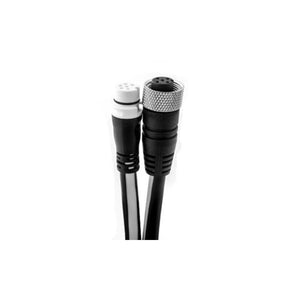
Genuine cabling keeps a Raymarine system talking. This collection covers the Raymarine cables and connectors needed to install, extend or repair your electronics: SeaTalkNG backbone and spur cables, terminators and power cables, transducer extension cables, display power leads and the adaptor cables that bridge SeaTalkNG to standard NMEA 2000 devices.
Raymarine's SeaTalkNG network uses its own colour-coded connectors - backbone cables and five-way connectors form the spine, with spur cables dropping to each instrument, plus one power spur and terminators at both ends. When ordering, identify the connection type at each end of the run and measure the cable route generously - tidy installs always need more length than the straight-line distance. If you're unsure which cable your setup needs, tell us the devices at each end and we'll identify it.
Frequently asked questions
Is SeaTalkNG the same as NMEA 2000?
They carry the same data but use different connectors - SeaTalkNG is Raymarine's own plug system, and simple adaptor cables let standard NMEA 2000 devices join a SeaTalkNG backbone (and vice versa).
Can I extend my Raymarine transducer cable?
Yes, with the correct Raymarine extension cable for your transducer type - avoid cutting and splicing, which degrades the sonar signal and risks the warranty.
What does a SeaTalkNG network need to work?
A backbone with a blue terminator at each end, a power spur fused to 12V, and a white spur cable to each instrument - most problems trace back to missing terminators or missing power.